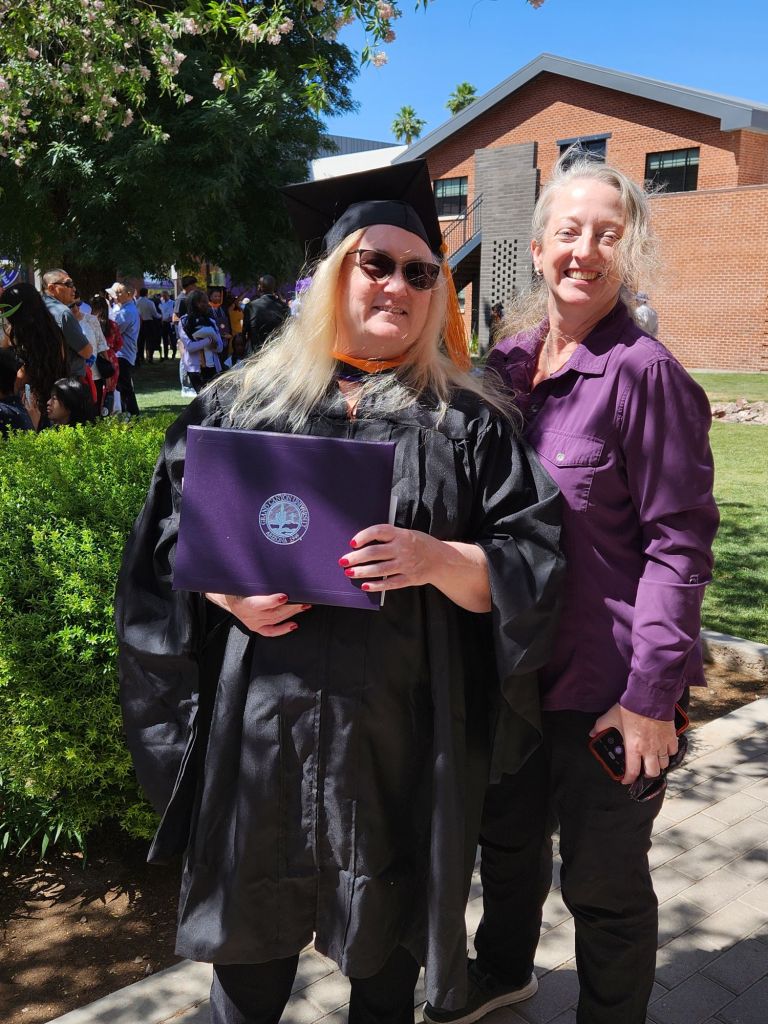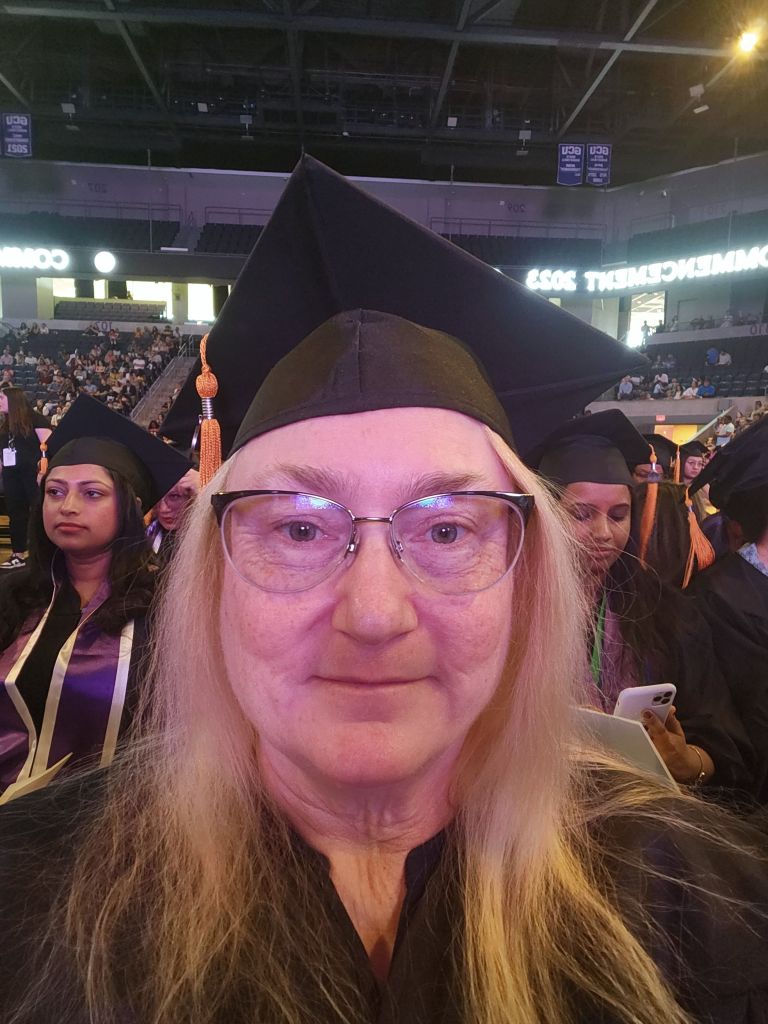
An NP on the spectrum….

    Being diagnosed as being on the autism spectrum (during nursing school  to become an RN no less) was a relief, but it also brought with it confirmation that I would have alot of work to do to be able to help people the way I wanted to. I didn’t want to miss anything.

    I studied body language and nonverbal communication, and therapeutic modalities as much as I studied pharmacology and nursing skills. It paid off, as did all my experiences as a caregiver and CNA.  I was never  as fast as those younger nurses 20 +years younger than me, but I gave patients everything I had to give, and got my charting done before going home each day.  I had been growing as nurse for more than 5 years before I went back to school to become a nurse practitioner. 

Getting ready for nightshift

I made it through school and licensing, and realized I had gone from an experienced competent  RN to a brand new nurse practitioner…And now was taking care of Dad, working as an RN, as well as looking for the next step – my first job as an NP.  Would I be able to do this?  Dad was so proud, and was sure I would be a great NP, but I was worried. Now I had even bigger shoes to fill…and where were all these jobs?

Life was about to change, in bigger ways than I could imagine.  I would lose my Dad, but find my calling, my true north.

Joy and Stress

During my first clinical rotation as a NP student, I was originally going to be with and older doctor whom I really admired.  Less than 1 month before starting clinicals and classes I called to confirm, and I was in panic because I was told sorry we forgot  and your spot was given to a med student. I was at work, went to the cafeteria and ran into our former house super, now an NP. I asked if I could do my first clinical rotation with him…and he said yes!!!   I was very nervous, and thankfully, he was kind and thorough as a preceptor.  What I didn’t know is I would learn more from him than my original first choice.  He gave a compliment to my clinical supervisor/liaison telling her I was so good he kept forgetting it was my first rotation.  I hung on to that when I got nervous, which was often.  I was getting by on very little sleep, working full time nights, classes and clinicals during the day, living on sugarfree energy drinks and coffee, a diabetic diagnosed in 2020….But that clinical rotation was leading me to everything I wanted to be….and it was the most fun I ever had working for free.  Small miracles every day!  I was interviewing, assessing, formulating a plan or care, differential diagnoses, tests. I knew I was missing something when he would ask what made me choose the direction I was going in.  It was wonderful and nerve wracking, because not only did I worry about missing something, but I equated missing something with failure, when really, it was a learning curve.    During this process, I also realized yes this was my mountain, my path, and he could help, if I could just get out of my own way.  I was fully invested, in a way I never had been before, and I would be taking the best parts of my preceptors, mentors, heroes and myself to create a new way of helping those I could…And learning how to forgive myself and others along the way.

Masked and Determined

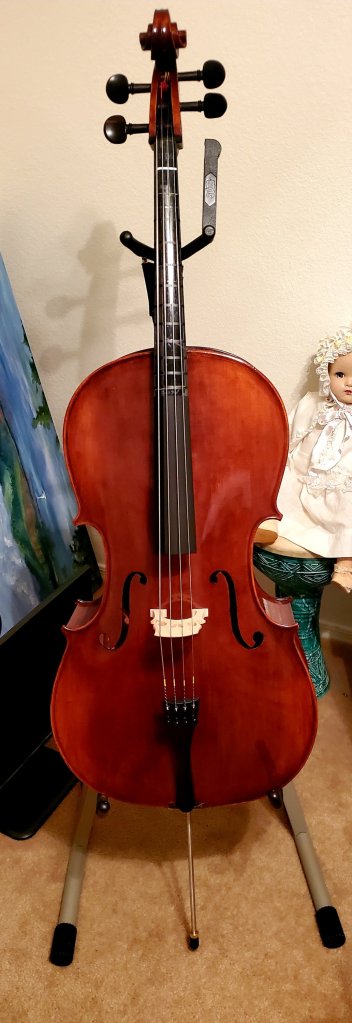
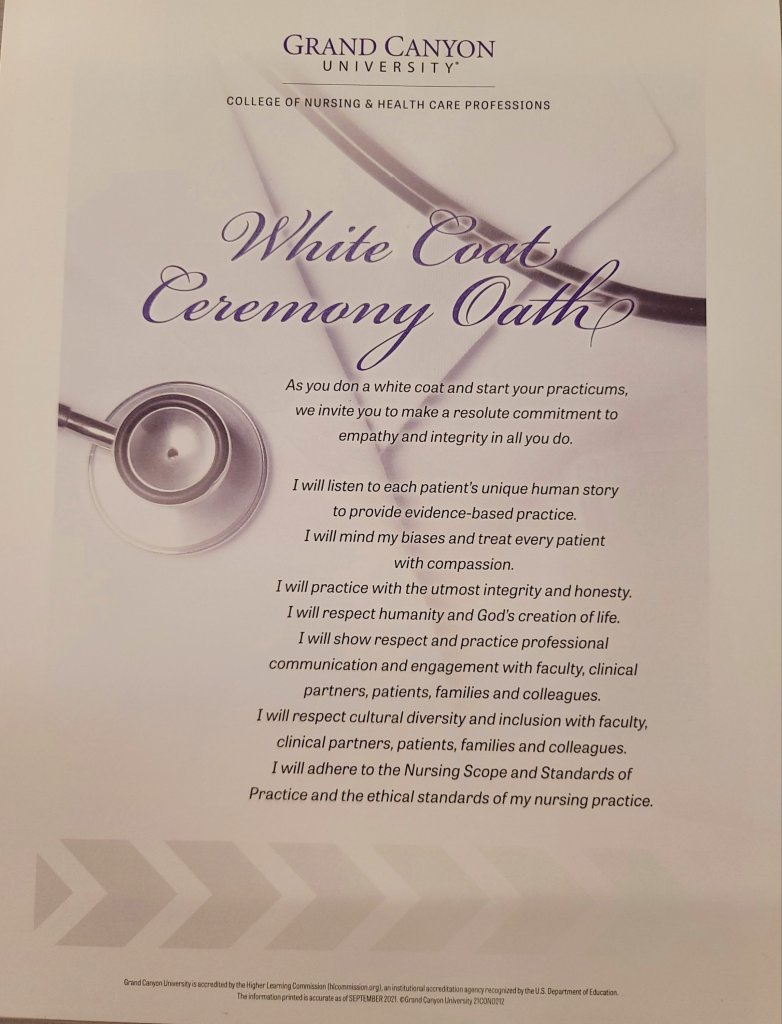
My first day back to work after coming back from Cambodia, there were tents in the parking lot behind the emergency room, where people would be triaged, if it came to that. Everyone was wearing masks, and Temps were taken before we could clock in. That is when I heard what was happening with Covid, and that it was a pandemic. I already caught pneumonia from patients far too often,due to my lungs being my weakest area-I already was on inhalers and meds for asthma. I volunteered for a local Moderna study, and thankfully, I got the real vaccines a year before anyone else. There was too much suffering and death, spirits were low, and I wanted to do more, and see people get better, not die. So, after deliberating, and being influenced by a very smart provider teaching medical students, I decided to become a family nurse practitioner. I still worked full-time nights as a nurse, kept that up, plus started learning the cello while going to school from 2020-2023, and doing my clinical rotations during the day. I won’t go through the depression, grief and emotions from those years, but it motivated many of us to leave bedside nursing. My patients for almost 2 of the 3 years were predominantly Covid patients, and it changed to a mix – our new normal, after that. Before starting clinical rotations, my school had our white coat ceremony. Below is our oath. Different from the traditional, but memorable, and heartfelt.

A different world

It was January 2020, and there was talk of a mysterious disease in China.  It seemed localized, and the idea of a pandemic was not yet known, so after a year of planning, I and my friend went to Cambodia as scheduled. We went through Hong Kong, Singapore, and arrived in Siem Reap.  It was foreign in a way so totally different from my own culture….I was unprepared, enthralled, and stunned by the generosity of spirit, friendliness,and the opulence of the hotels contrasted with the poverty all around us.  We saw amazing temples, once in a lifetime adventures. So much beauty, and the reality of disparities. At the end of our 12 days, we were both changed by our experiences, as we boarded our flight. We made it from Siem Reap to Singapore, where we were questioned if we had been ill, and our temperature was taken.  In Hong Kong we were told to deplane, marched through a specific path with security not allowing us to diverge from the path.  We were given masks, questioned again, and marched to our plane and told we must wait on the plane, not in the airport, without any explanation.  When we touched down in the US, we were checked for fever and illness, and sent on our way.  I caught a commuter flight home, and had no idea what I would see at work in a few days. My world seemed different already, between culture shock and a feeling of foreboding, but nothing prepared.me.for.what was next.

Out of the Shadows

The last year I chose not to write, because I spent the last year in a specific therapy called EMDR. It is something that works well for trauma survivors, and without going into too much detail, it was money and time well spent. It took the experiences and memories my brain had walled off for self preservation, and processed them. It got rid of the power they had over me. Life is differently framed, and I am still learning and changing as a result. I am stronger and more resilient for my patients, gentler with myself, and more sure in my own perceptions and abilities. Little did I know how much I would need that resilience. I came back from my trip to Cambodia in January of 2020, and the whole world was about to change, and with it, my own path.

Shifting Sands

Its been quite some time since my last post. I have a dilemma because the same things I would write about to help others could potentially hurt me. As an Aspie, and an RN, I have struggled much more in some ways than a neurotypical. In some ways, I also have some superpowers, that help level the playing field. Most of those superpowers are not Aspie, but coming from a place of finding my way back from abuse, rape, cancer, 2 motorcycle accidents, scarcity and poverty, and finding out how to use those things I considered broken to heal others and be their strength. In doing so, I healed myself. enough to see the rest of the work I need to do, and how to get there. I have now been a nurse for 4 years, 8 months and 1 day. In that time, my journey has been one of fear versus faith, integrity, and finding my way by jumping forward, and recognizing the hardest work yields the biggest rewards.

I have since then gotten my BSN, and have been accepted into the FNP program. I still work in Med Surg/Med Tele, but have floated to the ED, OB, CDU, and Ortho. I have been a member of the fall prevention committee, and have guest lectured at the same college I got my ADN through. I went to Cambodia and explored Ang

kor Wat, and all the temple ruins…Before that, I traveled to Israel and walked where Jesus had been. These are miracles if you knew me. There is a way being made for me, and a path through to achieving my goals and helping people, and I am learning to trust in that.

I am still deciding how much of my story to share, because the internet is forever, as we all know…But I am thinking the benefits of sharing outweigh the risks. If it helps anyone at all, it is worth putting it out there. Mine is a path of shifting sands, losing and finding balance, and a clumsy kind of grace, and realizing I can become the guide I wish I had when I was younger. I wish anyone reading this grace and peace, and the help along the way you need.

Touchstone and my first Code.

Its 2019, and I have come back to these posts multiple times, remembering where I was versus where I am now…Wondering what I can put here to help new neurotypical nurses, new aspie nurses, and maybe myself someday when I need to remember why I chose this path. (It happens) I can see the mountain I have climbed up, and the bigger ones in front of me. These pages , and the care I give my patients, the way I interact with everyone, and the kids I support via Childfund International (three kids in 3 different countries) may be my only legacy to the world. I am single,..A few close friends, a dog… It will have to be enough.

Sometimes the way backward is the way forward. When I lose my way, and struggle with compassion, tiredness, and yes, even anger and frustration, I step back, and remember why I loved being a CNA, what I loved about nursing, and what I wanted to accomplish by becoming each of these at different times in my life, more than anything in the world. That is my touchstone. That will put me back where I am supposed to be. Recognizing when you are exhausted and not following your path helps, realizing you need to ask for time off is important, and looking back at your ideals and goals are essential to not burning out before you bloom.

Knowing what you can handle and can’t comes with time. My first Code was an experience every nurse goes through…I was ok during, but was crying after. I did chest compressions, and when you feel the mushy yet resistant and sometimes momentary crunchiness of the person underneath your hands, it is shocking, and feels wrong on so many levels. It feels violent and that you are doing harm to try to save that life….But you do it, because it CAN save a life. The training and adrenaline will get you through. When its all over, and the person lives or dies…That is when the emotions hit. It gets easier to take part in, and easier to control the emotions afterwards, but it affects everyone involved. Do not feel bad if you cry. Feel bad if you feel nothing. That is when you should worry. I will help in codes, but if I am not needed, I will take care of call lights and patient care while this is going on.

I am really good at keeping the other patients calm when they hear a code called overhead…or helping them through something they fear. I am really good at keeping everyone safe so the rest of my team can do what they need to do. I am ready to take part in codes, and to take on new roles. It is a process of growth. As you grow, you will find your place as a team member…And that place and role will change as time goes on.

Hero worship,modeling, and embodiment.

This post isn’t just for aspie nurses, as it will help anyone facing fears and pursuing nursing. The thing about nursing mentor hero worship is that as a new nurse, is healthy, productive and normal, but you have to recognize it for what it is, and use it to become better. It goes without saying some of your nursing instructors will feel larger than life, and be your first heros and role models. I know 2 in particular that were mine, and I am honored to call them both friends now. What I am talking about is a bit different though. I am talking about who will keep you going, and mentors in your first few years as a new nurse.

My first case of nursing hero worship was an author named Tilda Shalof. I read her books about becoming a nurse, and they made me want it bad enough to keep going in the face of everything life threw at me, and all the emotions of my first year as a new nurse. I still read her books when I need a boost. If you haven’t read her, pick up her books.

My second case of hero worship was a preceptor/mentor who helped me to become an effective nurse, after a very bad experience that almost made me quit. She was an experienced nurse, brash, sweary, quick, sharp,and intense off stage, professional and kind on stage. She was everything I wanted to be, and I was pretty much convinced she walked on water. I look back now and think she must have had to use all her willpower to get through teaching me, as I was perpetually scared of failure, slow where she was fast, and asking her daily if I was making enough progress. She built me up, made me think through every skill, every case we had, and stepped in if I was overwhelmed, gradually drawing back as I could do more and more on my own. She taught me to stand up for myself, my patients, and to not let bullies get the upper hand.

Now, almost 2 years later, she still makes me want to be a better nurse without doing anything, just being there. Since then I now look at those nurses around me who seemed so far ahead of me on my path as models of where I should be at different points in my experience level. Some goals I have set and reached, others I have not. Another influential person for me was my director. She taught me not to fear admitting mistakes, and to admit them if they happen, as talking it through may result in a change in protocol that prevents someone else making the same mistake. She also embodied all the leadership skills I needed to make me a better nurse.

Another realization is that we are all heroes and role models for each other at different times in our nursing careers. I realized this near the end of my second year as a student. I was in surgical scrubs having just watched a surgery up close. I was still wearing the cap and mask. 2 students looked at me not recognizing a fellow student, with the same hero worship I had looked at experienced nurses with visible on their faces. It made me realize we each view the person ahead of us on the experience curve as having it all together, and being wise, and that’s ok. It keeps us all reaching, growing, and learning.

Just realize when you are with someone with less experience than you, this may happen, be kind, and know you may change this person’s life the way someone changed yours. Embody those qualities of who you want to be, and you help others to grow as well as yourself. Sometimes you can, sometimes it’s all swearing and bizarre humor off stage instead. Both are part of this profession. There are experiences that bless, and those that break, and we all cope with both the best we can.

Competence in Chaos

This was really hard, but if I can make it through, so can you!! I had a mix of seasoned and new nurses who were mean or kind, knowledge sharers and non sharers. Initially this mattered a lot, but ultimately, as I changed and grew, it mattered less and less, because my knowledge base and confidence grew, and I could advocate for myself as well as my patients.

I was so focused on what people thought, and learning how to take good care of my patients, and time management, that I didnt stop to think about why I was full of anxiety and in tears at some point every day. I started having nausea and panic at the thought of coming in to work because of mean nurses who made fun of me, or made disparaging comments instead of helping me to become better. I just believed all the negatives. Dont do that! You can become a great nurse! All of us have different skillsets, and you will find yours, if you are persistent and patient with yourself and others. We all have gifts that the patients and other members of the healthcare team can benefit from.

I didnt realize that the fuzzy anxious feelings, nausea and tears were not all emotional. I have had to deal with these all my life, at different times. It was also sensory overload, and feeling overwhelmed. There are buzzers, bells, clicks, tons of people, and a whole bunch of stuff going on all the time. It doesn’t ever fully stop…but there is a rhythm to it. It ebbs and flows. Even in the bathroom, or in the breakroom, call lights go off, lab calls with critical, family members ask for updates at bedside, providers ask you to take orders. You will find the lulls in the rhythm eventually, and use those to catch up on charting, pee, eat something, and step back so you can regroup. Initially, a new nurse doesn’t see the rhythm, and it will feel chaotic.

Some things that help every new nurse: get to work early so you can look up your patients before getting report. Look up med times for each patient, so you can give them each on time. Organize your patients by med times and prioritize by needs. Create a simple sheet that lists basics for each patient- assessment, med pass, charting, chart or order checks, whiteboard, tasks, careplanning, fall precautions, in whatever order works best to keep you on track. Focus only on the patient you are taking care of when in the room with that patient. In simple terms, create some order in your seeming chaos.

Until you are comfortable dealing with patients, script your dialog. An example would be: Hi! My name is Alli, and I will be your nurse today/tonight. Are you having any pain or nausea? Can you point to where? On a scale of 1 to 10 what is your level…. While I am in here do you need to go to the bathroom or be changed ? No? Ok. I am getting report from the prior shift on all my patients, but after that I will start checking on all of you. If you need me just press your call light…yes that button.

Scripting is a great tool to improve patient satisfaction survey scores too. If you announce before you walk in to a patients room let me sanitize my hands for your safety, and they see you rubbing hand sanitizer on your hands, they will say yes you were.doing that on the survey.

The hardest hurdle as a newbie for me was sensory overload. I got better at recognizing when it was happening, and found that all I needed if I caught it in time was a few minutes in the med room or supply closet of quiet, and I could get rid of the impending tears, fuzziness, and anxiety. If I didnt do it, I would fall apart. I also needed to not talk for a few minutes when I was at that point. Talking would also bring on tears. Another trick is to stop thinking 10 steps ahead with all the what ifs…Instead, make yourself focus on only the current task. You have to.

I play soft classical at my computer very low while charting. It gives me a focal point other than the constant noise of the hospital. I can still hear my patients, but it helps me. I have a fidget toy in one pocket, and snacks. It also helps me to know that other members of my team have anxiety, depression, health problems, and various issues of their own, and we support each other. If someone needs a moment we pick up their work for a few minutes to give them that time. It’s part of being a team, and a work family.

As an aspie, it may take longer to build those bonds with your coworkers. You will, though. They need to know you to trust you, and that takes time. Do your best, stay positive,ask for help and advice, and offer to help when you can, and it will happen. My first year was rough, the second was better, and now in my third, I am ok floating to other units, and stepping up to new challenges. I am not going say its it’s easy- I still panicked the first time I floated to the emergency room, as I didnt have a log in, know their charting system, or game plan/rhythm. Our charge rn talked to that unit’s charge, as did I, and I got a quick overview of the charting, a log in and a plan. I did fine, and know I can do it! I still face some challenges being an aspie, but I have the tools to deal effectively with what comes my way. I know I can make a difference and do. Be kind to yourself. That is the first step. You cant be effective if you are being a bully to yourself. Face outward, not inward.

No Express Elevators, Just Lots of Steps….

So now we come to the part that requires courage for any new nurse, the process of learning that will take you from newbie to competent. There are no express elevators, no shortcuts. For me, in particular, this was especially difficult. A young confident person sees what they do right more than what they do wrong. They aim themselves in a direction and go. I was older, more cautious, and I wanted and needed all the answers so I could see all the options and consequences of interventions. I was acutely aware of any information missing. I spent every day looking at my actions and determining what worked, what didnt, and feeling terrible because I wasn’t perfect. No patient was harmed, they all got good care, but I could not see that then. All the light, noise, people and stress bombarding me was magnifying my issues, and I had at least one meltdown a day, and could not let anyone see what was going on, because normal people dont do that!! Despite this, I loved taking care of people, and all things medical. It was my special interest.

So over time, by working on nights, with persistence, practice, a firecracker of a preceptor, and a few compassionate coworkers,and teachers turned friends, I first got to the point I could tamp the anxiety down, and didn’t hit that meltdown stage til the end of the shift, then until after the shift, and then I had a day where I didn’t cry. I was over the moon happy to have taken care of my patients well. It took me a year. It would be another 6 months before I started to build confidence and realize I did provide good care, I was becoming the kind of nurse I always wanted to be, and it would be at the two year mark when I stood up and advocated for my patients, and another 6 months before I started advocating for myself, and really caring for myself as well as I did others. I would still have moments, days and sometimes weeks of good bad and scary, but I could and was handling it! Next up, how to avoid the melt downs in the first place, how find calm in chaos, how to pick your battles, and ask for help from the coworkers who will become family.